- 0
- 1,688 word
In 2008, a billionaire industrialist is kidnapped in Afghanistan. Instead of surrendering to fear, he builds something inside a cave that changes his destiny. That story belongs to Tony Stark in the movie Iron Man.
Most people remember the action. Very few understand the philosophy.
Tony Stark did not escape because he “wanted” to escape. He escaped because he built a system in the suit.
That idea is bigger than a superhero movie. It is the same principle the Wright brothers used when they wanted to fly. They did not jump from cliffs, hoping to stay in the air. They built a machine that made flying possible. It is the same logic behind algorithms created by Mark Zuckerberg, where systems decide what content you see.
Human civilization did not grow because of goals. It grew because of systems.
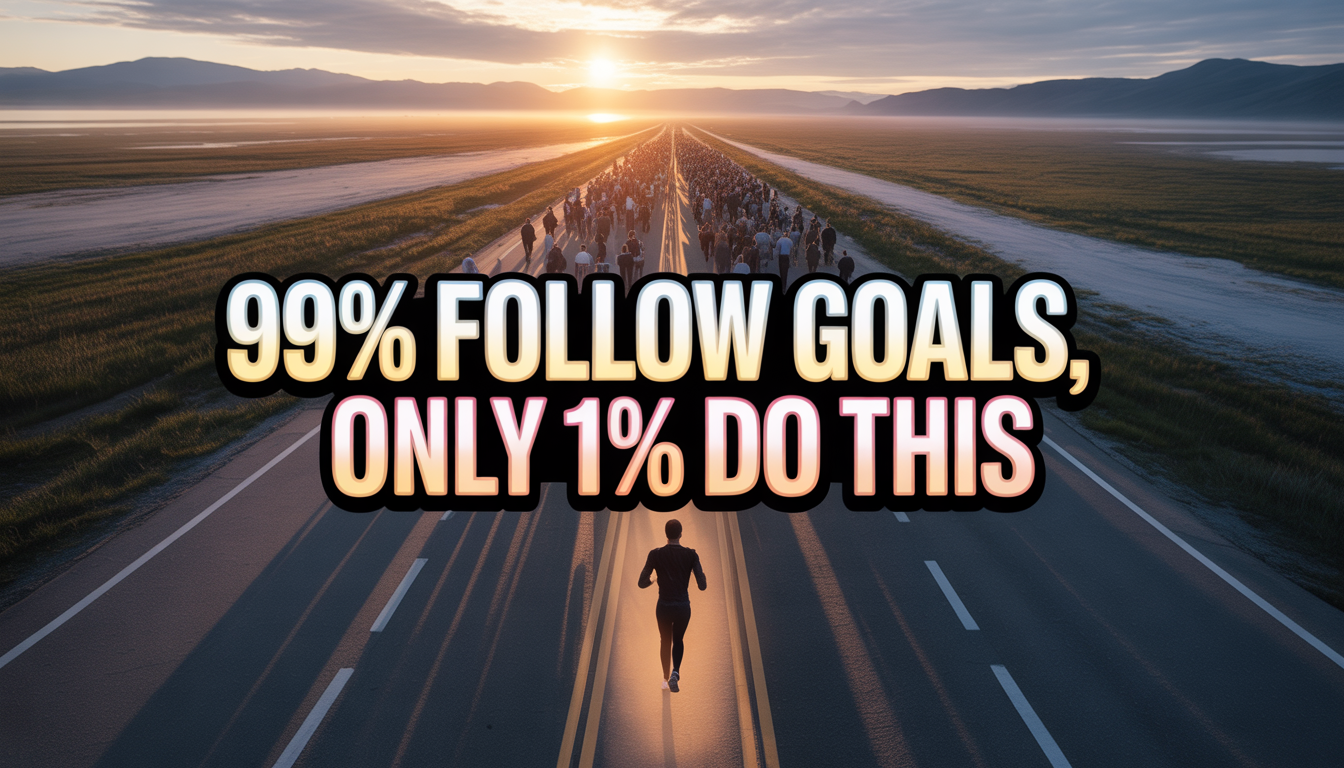
Yet in personal life, 99% of people chase goals. Only 1% build systems and that is why most people fail.
Why Goals Feel Powerful but Still Collapse:
Every January, millions of people decide that this year will be different. They promise to go to the gym. They promise to eat clean. They promise to start a business, crack an exam, fix relationships, wake up early, or read more books.
And then, within weeks, motivation fades.
A 2020 study by Swedish researchers tracking New Year’s resolutions found something predictable. Most participants abandoned their resolutions within weeks. Only a small minority stayed consistent for an entire year.
This pattern is not because people are lazy. It is not because they lack ambition.
It is because they focus on goals instead of systems.
A goal says, “I want to lose 10 kg.”
A system says, “After brushing my teeth every morning, I will do 10 push-ups.”
A goal says, “I want to become successful.”
A system says, “Every weekday from 7–8 PM, I will build one skill related to my future.”
Goals create direction. Systems create progress; without a system, a goal is just an emotional wish.
The Two Brain Errors That Destroy Consistency:
The first problem is what we can call the hype drop.
When you start something new, dopamine levels are high. Excitement is fresh. The brain feels rewarded. But as repetition increases, dopamine response decreases. The activity that once felt exciting now feels ordinary.
That is why you no longer play the childhood games you once loved. That is why a song you replayed 50 times now feels boring. The brain constantly seeks novelty or intensity. But here is the twist. When it comes to unhealthy habits like junk food or scrolling, we increase intensity. We eat more. We scroll longer. We binge. When it comes to healthy goals like the gym or reading, we quit
The second brain error is a preference for instant gratification.
Long-term results follow a delayed curve. Early progress is invisible. Then, suddenly, growth accelerates.
That growth pattern can be understood like exponential improvement:
At first, progress feels slow. Almost flat. Then, over time, consistent small actions compound and rise dramatically.
But the brain does not like waiting for that curve to rise. Pizza gives instant pleasure. Scrolling gives instant stimulation. The gym gives delayed transformation, and the brain chooses what feels rewarding now unless you design a system that rewards progress immediately.
What a System Really Means:
When people hear the word system, they imagine strict rules written on paper. Rigid routines. Forced discipline.
That is not a system.
A real system is subconscious automation.
Breathing is a system. Brushing your teeth is a system. Driving while talking is a system. These actions no longer require decision-making energy. They are wired into your behavior. Systems are not about control. They are about subconscious programming.
When you were a child, tying shoelaces required effort. Today, you do it automatically. That is what you must build for your big goals. The goal is the destination. The system is the engine.
Step One – Identity Shift:
Before you build a system, you must shift identity.
J. K. Rowling did not become successful because she wanted to publish a book. She wrote consistently despite rejection. Her identity was not “I want to publish.” Her identity was “I am a writer.”
In Atomic Habits, James Clear explains that every action is a vote for the type of person you want to become.
If someone offers a cigarette, and you say, “I’m trying to quit,” you are still connected to the old identity. If you say, “I’m not a smoker,” you are declaring a new identity. Sachin Tendulkar practiced daily not because of a short-term goal, but because his identity was clear: I am a cricketer.
When identity shifts, discipline feels natural. Instead of saying, “I want to get fit,” say, “I am someone who trains consistently.” Instead of saying, “I want to write,” say, “I am a writer.”Identity first. Outcome later.
Step Two – Transform Wishes into Structure:
Wishes are emotional. Structure is executable.
Think about exam preparation days. When only a few days were left, you created detailed timetables. Subjects are divided by hours. Breaks scheduled. Chapters assigned.
Why?
Because you knew that without structure, you would fail. Life works the same way.
“I want to switch to data science” is a wish.
A structure would define target role, timeline, skill acquisition plan, project deadlines, number of applications per week, and interview preparation schedule.
“I want to get fit” is a wish.
A structure defines body composition goals, workout frequency, sleep schedule, diet plan, and progress tracking intervals. The structure executes and execution builds systems.
The Four Pillars of an Unbreakable System:
TRIGGER ENGINEERING:
The first pillar is trigger engineering.
Triggers are signals that automatically initiate action. When your alarm rings, you wake up. When your phone vibrates, you check it for intentional triggers.
“When I finish brushing my teeth, I will do 10 push-ups.”
“When I sit at my desk at 9 AM, I will write one page.”
“When I get into bed, I will read one page.”
Link new habits to existing ones. This method, often called habit stacking, reduces reliance on willpower.
ACTION MINIMIZATION:
The second pillar is action minimization.
People fail because they start too big. One-hour gym sessions. Fifty pages daily. Two hours of meditation. start ridiculously small.
Read one page.
Do five push-ups.
Write one paragraph.
Starting requires activation energy. Once started, continuation is easier. Systems should never break, even if the intensity reduces; consistency beats intensity.
REWARD LOOPS:
The third pillar is instant reward loops.
Your brain needs dopamine now, not in six months. Mark a calendar with a tick each day you complete your action. Write one line in a journal: “Today I did it.” Smile at yourself after finishing. Celebration is not childish. It is neurological reinforcement. The brain repeats what feels rewarded.
FAILURE PROOF SAFETY:
The fourth pillar is the failure-proof safety net.
Most systems collapse because they assume a perfect plan for failure in advance.
If you miss one workout, the next day, do a minimal version.
If you skip studying, cover it on the weekend.
If routine breaks during travel, follow the smallest possible version.
Never miss twice. Perfection is fragile, resilience is powerful.
The Real Difference Between 99% and 1%:
99% chase motivation.
1% design environments.
99% depend on willpower.
1% reduce decision fatigue.
99% say, “I will try.”
1% say, “When this happens, I will do this.”
Like Tony Stark building a suit inside a cave, the situation may not change immediately. But when you build your system, your response changes, and when your response changes consistently, destiny follows.
The question is simple: do you want to pursue goals every year and feel regret every December, or do you want to build systems that operate quietly in the background, pushing you forward even when motivation drops?
Your life will not change because of one big resolution. It will change because of small systems repeated daily.
99% follow goals. Only 1% build systems.
Which side are you choosing this year?
Conclusion:
Goals feel exciting because they give you a vision of a better future. But without systems, that vision fades into frustration. The real difference between people who succeed and those who stay stuck is not talent, luck, or even motivation it is structure.
Systems remove the need to constantly decide, force, or rely on willpower. They turn effort into habit and habit into identity. When your actions become automatic, progress stops feeling like a struggle and starts becoming a natural part of your life.
The truth is simple: you don’t rise to the level of your goals, you fall to the level of your systems.
You don’t need a perfect plan. You don’t need massive motivation. You need small, repeatable actions tied to clear triggers, supported by simple rewards, and protected by flexibility when things go wrong.
Over time, these systems compound quietly. They reshape your identity, your discipline, and your results.
So stop asking, “What do I want to achieve this year?”
Start asking, “What system will I follow every day?”
Because in the end, goals set direction, but systems decide your destiny.
FAQs:
1. What is the main difference between goals and systems?
Goals define what you want to achieve, while systems define how you achieve it daily. Goals give direction, but systems create consistent progress.
2. Why do most people fail to achieve their goals?
Most people rely on motivation and willpower, which are temporary. Without a structured system, consistency breaks, and goals eventually collapse.
3. How can I start building a system in my daily life?
Start small. Choose one habit and connect it to an existing routine (like brushing your teeth). Keep the action simple and repeat it daily until it becomes automatic.
4. What should I do if my system breaks or I miss a day?
Don’t aim for perfection. If you miss a day, return the next day with a smaller version of the habit. The key rule is to never miss twice.
5. How long does it take for a system to become a habit?
It varies from person to person, but with consistent repetition, most habits begin to feel automatic within a few weeks to a couple of months. Consistency matters more than speed.
Author

officeworks1419@gmail.com